Showing posts with label drought tolerant. Show all posts

Monday, August 7, 2023

The July Garden


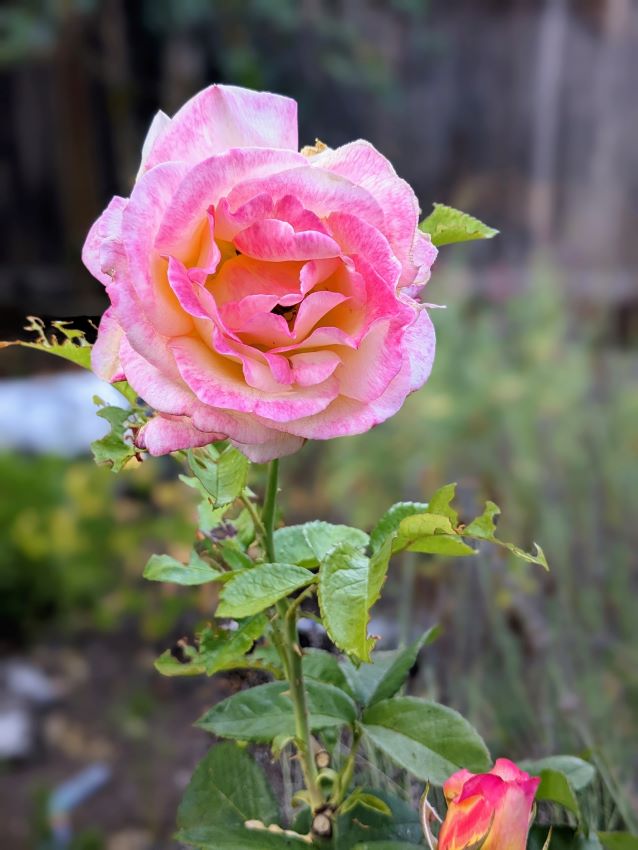
Sheila's Delight - one of the three roses I grow

The summer months of July and August are not big months in the garden. The "show" happens in May and June whereas July and August can even look a little tired. Many plants are past their blooming prime and others are not quite there yet. But still, there is a lot going on and beauty could be found everywhere.

I always love looking from the fence toward our house - look at those shadows on the walkway! The Japanese Maple is doing really well this year. When I bought it, it was tiny and lived in a pot for many years. Finally, 12 years ago I planted it in this big tub after I had removed the bottom of it, so the roots can actually grow into the ground. The tree really took off after that. In July I also cut down the rhododendron that was next to it, and now the little tree can show off all its glory.


Hello Goodbye - the poppies were on their very last leg - usually they don't make it into July - and the California fuchsia (Epilobium 'Bowman's Hybrid') started blooming toward the end of the month. These flowers are exceptionally drought tolerant and display a spectacular color when in full bloom.


Last year my Drumstick Allium (Allium sphaerocephalon) didn't do much and left me underwhelmed, but this year was a completely different story. It bloomed for weeks and weeks and only toward the end of the month showed some signs of tiredness. 


I often have deer strolling through my front garden, leaving little presents. They also determine what I can and can't plant. Often they obviously don't get the message that they're not supposed to eat certain plants (these rascals even nibbled on my young olive tree).


The lavender was still going strong which surprised me since usually they're done by July. Not this year, when everything was at least two weeks late because of the colder than usual and extremely wet winter.


Some of the Echinacea was doing better than usual, some were a bit blah - they just do whatever they want and I'm fine with it as long as they don't die on me (which some of them did). Unfortunately, plants that do well in everybody else's garden do poorly in mine. The worst is milkweed - I never get it to grow. Last year I planted native milkweed that is supposed to do very well in California - but not in my garden. I tried so many times without any success or just tiny, tired plants, so now I've decided to just let it go and not try again. 


On the other hand, my Vitex agnus castus is outperforming itself this year. This variety is called "Sensational" and it sure lives up to its name. This is a wonderful small tree, drought tolerant and thrives on neglect. The deer don't like it either. I have three more of these, all at different stages of growth, and one white one. Behind it (in the left photo) you can see the "puffs" of the Smoketree.


Verbena bonariensis is a favorite of mine and also of the bees - doesn't need much summer water and creates a beautiful accent throughout the garden. It mingles with the blue bog sage (Salvia uliginosa) which despite its name is very drought tolerant.


Another favorite little tree is our native form of Elderberry (Sambucus mexicana) which has a beautiful vase shape and gives shade to its surroundings. I don't pick the berries, but leave them for the birds or let neighbors pick them.


My goal is to have more of those trees (Elderberry, Agnus, Western Redbud) in my garden since they cool down the area and are just good for the environment. By now I'm getting more and more of those "woodland" parts in the garden. I was able to plant native Western Sword Fern (Polystichum munitum) as well as Pacific Bleeding heart (Dicentra formosa, which goes dormant in the summer) and so far they have been doing well. I also love to see grasses like this Oriental Fountain grass (Pennisetum orientale) gently sway in the wind.


My tomatoes have been doing very well and I already harvested a good amount. This is "Sungold", a very sweet and delicious cherry tomato. I usually eat it right from the bush, but I also put it into salads. The native grape "Roger's Red" (Vitis californica) has developed into nice little grapes and I suspect veraison will happen pretty soon. That is always very exciting for me (don't ask me why).


In my eyes a California dry garden is not complete with one or two varieties of native Buckwheat. This is such an easy plant - after it got established in the ground you can forget it. It's not fuzzy about the soil, it doesn't want additional water, but it's happy if the flowers are cut back sometime in late autumn. It's popular with pollinators and I often see butterflies sitting on the tiny flowers. Red buckwheat (Eriogonum grande rubescens) on the left and St. Catherine's Lace (Eriogonum giganteum) on the right.


The tour through my July garden is coming to its end - I think we need something to drink. That's also required in order to join Bleubeard and Elizabeth's T Tuesday where we all get drunk ... uh, show our drinks. Weißbier (also called Hefeweizen) is the perfect beer for summer. We were very happy to discover this Bavarian one at Costco, even though we would have prefered glass bottles. I guess we can't have everything. Anyway - Prost! Cheers! Santé! Sláinte! Salud! L'chaim! Ganbei!


I will take a break from blogging for a few weeks. I'm not quite sure when I will be back, but I expect to be here again sometime in September. I wish all of you sunny and happy summer days (or the arrival of spring if you're on the "other" side) and see you in the fall.


Monday, July 4, 2022

T is for Thriving Summer Garden


In summer our gardens often look a bit tired. May usually is a striking month in the garden with blooming flowers galore, but when July rolls around some plants already look a bit spent. This year, however, is different - maybe because of the rather late rain in April we had. I'm out there working in the dirt every day and I take so much delight the way the garden looks right now.

Let me show you some of my favorites.

The hebe I bought several years ago at the jail which has a great program where inmates work in the gardens and grow and nurture drought tolerant plants that they sell to the public. You have to make an appointment and go through security, but the selection (and the prices) are excellent. At first I had planted the hebe in the front garden. It was very slow growing and when it finally displayed a few buds, the deer came rushing in and nibbled them up. In the following fall I moved the plant to the back where no deer can enter and it finally took off.

Coyote mint  (Monardella villosa) is a California native wildflower, drought tolerant and loved by bees. It's a rather low growing plant, sprawling widely, sometimes climbing. It grows well in both sun and shade. I can't imagine a garden without it.

One of my most beloved favorites is another California native, Red Buckwheat (Eriogonum grande var. rubescens). It is low growing with brilliant reddish pink flowers that bees go crazy over. It pretty much doesn't need summer water and thrives on neglect. I'm planning to plant more of them in the fall.

A drought tolerant garden is not complete without lavender - I have several varieties, but my favorite one is "Provence" (Lavandula x intermedia 'Provence'). The bees agree with me.

You might notice that I have many flowers in purple and magenta shades. They do mix so well with each other. In the garden bed in front of my kitchen Clary sage (Salvia sclarea) mingles with lavender, some other salvias, butterfly bush (Buddleia davidii) and Shasta daisies (Leucanthemum x superbum).


But I also have plants in other colors, of course. Clockwise from top left: Helianthus annus Sunbelievable 'Brown Eyed Girl' (an annual sunflower), Verbena bonariensis, Shasta daisy (Leucanthemum x superbum), and Trumpet vine (Campsis radicans).

I also love small trees that don't need much water, but give some shade and thus cool down the garden a bit. Blue Elderberry (sambucus mexicana) is a California native with cream colored flowers in flat topped clusters.

My favorite tree, however, (I have four blue and one white) is the Chaste tree (Vitex agnus-castus). This one is "Sensational" - it attracts a wide array of pollinators. No extra summer water needed.

A hollyhock (my guilty pleasure) grows right into it.

The garden wouldn't be complete if there weren't some seedpods that I left standing on purpose - poppies (Papaver somniferum) and Love-in-a-Mist (Nigella damascena).


My neighbor's Mimosa tree (Albizia julibrissin) is reaching over the fence, gently waving in the breeze. While I wouldn't grow one in my garden, I do take delight in it.

It probably comes as no surprise that I love to spend a lot of time in the garden. Yes, there is an enourmous amount of work to be done - work I love to do - but I also enjoy sitting in the shade of a tree, reading a book, writing in my journal or knitting. A drink is always there - here I'm having Karkade, the cool hibiscus drink I first had in Egypt 26 years ago and that I have been making every summer. It is so good. This is for Elizabeth's T Tuesday.

I hope you enjoyed this tour through my summer garden. Come autumn and it will look different again.


Friday, May 18, 2018

The Garden in May


Marguerite Daisy "Summit Dark Pink"

May is a beautiful month in the garden. After rather shy early spring months the days are finally warming up and the garden is exploding with color. The soil is not yet dried out as it will be very soon and pretty cool nights keep some of the moisture. Just like every spring I had to pull out some plants that didn't make it through our mild winter, and that means there are spots in the garden that need to be filled. Several trips to my favorite nursery were in order. Ah, a gardener always finds space in the garden for new plants...

The California poppies - our state flower - always draw the attention. They are such happy flowers. Who can resist this good-mood color?

 Eschscholzia californica


They turn up everywhere - they are annuals but very busy (and successful) re-seeders. They come in different shades of oranges and there are even pale yellow ones that look rather delicate (they are not!). When they appear next to other plants they can create stunning color combinations - like with these gaillardias (blanket flower):


Gaillardia "Burgundy"

The Spanish Lavender is always the first of the lavenders to bloom, either in pink or in purple. The pink one even blooms in winter, it never seems to stop. Unfortunately I have lost the tag to it and can't tell you which one it is.


Spanish Lavender "Otto Quast"

A neighbor once gave me some seeds of the lovely Nigella damascena, also known as Love-in-a-Mist, after I had told her how much I like them in her garden. I sowed them and then forgot about them. They turned up in the spring of last year, re-seeded, and now I have so many more. They are simply lovely.


Love-in-a-Mist

Since this is a low-water, drought-tolerant, deer resistant (for the most part), mainly native plants garden the Matilija Poppies are a must. It is easy to plant them, but not that easy to grow them. Some gardeners actually plant three of them so that they will end up with one surviving because so many of them just die. I had tried to grow them in the Brookdale house where they always died. I gave them one last chance here, planted only one (always the optimist) and got lucky. The thing is - once you get to the point that they're established they grow and grow and grow.... and turn up in other parts of the garden since they spread by rhizomes. A plant only for the big garden and a complete stunner.


Matilija Poppy with Verbascum "Southern Charm"

Talking about poppies, let's not forget the "real" poppy, the Papaver. Up to last year I had so many of them that I was afraid they would take over completely, so I ripped most of them out before they went to seed. This spring I have far less that I will let go to seed again. They are way to beautiful to get rid of them completely. Some of the people who regularly walk by my garden (and always stop to chat when I'm out there) actually told me that they miss my poppy garden...


This is a favorite spot in a shadier part of the garden (thanks to a huge Blue Elderberry):


The Chinese Foxglove in the back have multiplied, the flowering currant has become quite big, the hollyhocks are doing okay after I sprayed them with "Liquid Fence" to discourage the roaming deer to have them for dinner all the time, the smoke bush finally grows in (it experienced the same fate as the hollyhocks) and everywhere - and I mean everywhere - there are wild Forget-Me-Nots. Just recently I moved the birdbath - two bigger terracotta pots put on top of each other upside down and a terracotta saucer on top - into this space and the birds seem to like it in this spot much more than in the old one. It's more protected I guess.

Rehmannia Chinese Foxglove 

Forget-Me-Not

One last plant - this one I discovered two years ago and planted it out of curiosity. It has become a true showstopper. It is growing like mad right now and the flowers are starting to perk up. This is Salvia sclarea "Piemont". It pretty much thrives on neglect, and if I'm not mistaken I see little ones popping out of the soil - they readily re-seed. The erect flower spikes, once they're open, are two shades of lavender and white. Stunning.


With the exception of the very first photo all these images are from my huge front garden. The backyard is still a work in progress. Maybe - I still have to think about that - I'll show some pictures from there as well. It has a blanket of weeds (aka "lawn") that I'm slowly sheet mulching into something more beautiful.
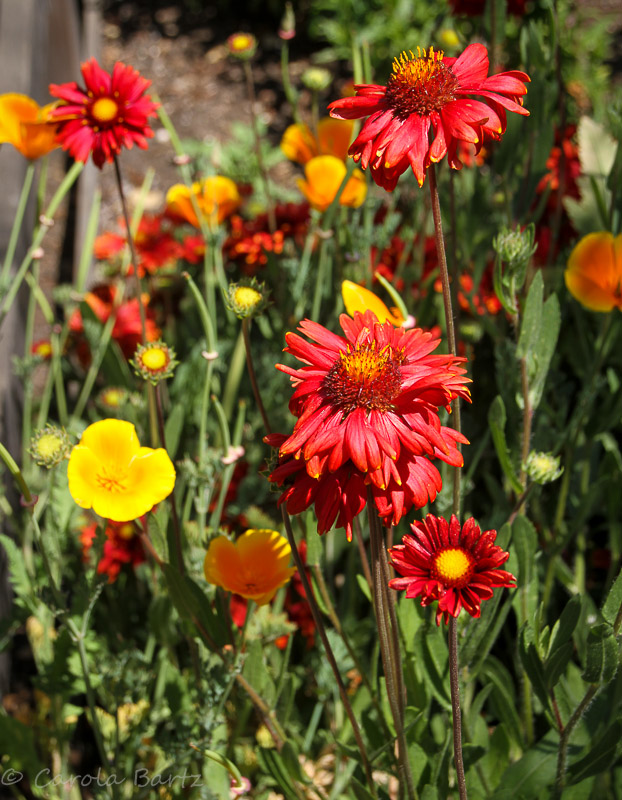
Some flowers in the front try to escape through the redwood fence that the Geek and I built five years ago.

Nepeta, Catmint

Can you imagine that it all started out with this almost six years ago (after the sheet mulching was complete)? From this...


... to this:


 If you want to know how I did the sheet mulching you can read about it here.